 By Caleb Morgan
Updated November 2026
A cycling training plan book gives you structured workouts, progression logic and recovery guidance in one place, which helps when you are building fitness without a coach. The three books below were chosen by comparing publisher descriptions, author backgrounds, the depth of training content and patterns in owner feedback about clarity and usability. Each suits a different kind of rider.
Best overall: The Cyclist’s Training Bible – View on Amazon
Best for structured beginner-to-intermediate periodization: Bicycling Magazine’s Complete Book of Road Cycling Skills – View on Amazon
Best for a short weight-focused kickstart: Racing Weight Quick Start Guide – View on Amazon
Our Top Picks
Quick Comparison
| Product | Best for | Key feature |
|---|---|---|
| The Cyclist’s Training Bible | Riders wanting depth | Comprehensive training structure |
| Bicycling Magazine’s Complete Book of Road Cycling Skills | Skill and fitness building | Skills plus training guidance |
| Racing Weight Quick Start Guide | Short weight-focused plans | Four-week structured plan |
The Cyclist’s Training Bible: The World’s Most Comprehensive Training Guide
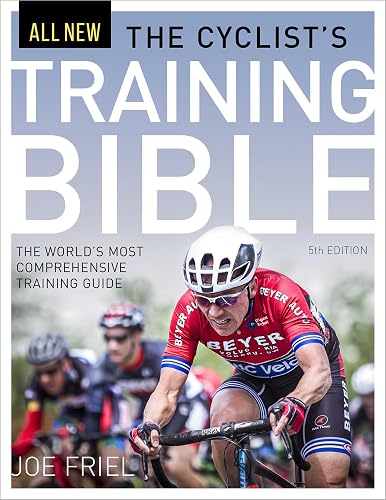
The World's Most Comprehensive Training Guide The Cyclist's Training Bible: The World's Most Comprehensive Training Guide
Best for: Riders who want a full reference on periodization, power and heart rate training.
This book suits readers who plan to ride for months and want to understand why each workout exists. Owners often report that its chapters are dense but well organized, so it works as a long-term reference rather than a one-time read.
Pros
- Covers training phases from base to peak in detail
- Useful for building your own plan as your fitness changes
Cons
- Can feel heavy for absolute beginners
Bicycling Magazine’s Complete Book of Road Cycling Skills: Your Guide to Riding Faster, Stronger, Longer, and Safer

Bicycling Magazine's Complete Book of Road Cycling Skills : Your Guide to Riding Faster, Stronger, Longer, and Safer
Best for: Riders who want training guidance alongside technique and safety skills.
This is a good fit for newer road riders who are still learning bike handling and want fitness advice in the same book. Owners frequently mention that the skills sections are practical and easy to follow.
Pros
- Pairs training advice with riding technique
- Written in an approachable, magazine-style format
Cons
- Training plans are less detailed than in a dedicated training guide
Racing Weight Quick Start Guide: A 4-Week Weight-Loss Plan for Endurance Athletes

Racing Weight Quick Start Guide: A 4-Week Weight-Loss Plan for Endurance Athletes
Best for: Riders who want a short, focused plan combining training and body composition goals.
This guide is aimed at endurance athletes who want to reduce body weight over a defined window. Owners often describe it as a quick, direct read, though it is narrower in scope than the other two picks.
Pros
- Concise four-week structure is easy to follow
- Clear focus on one goal
Cons
- Limited to a single weight-focused approach
Buying Guide
Match the Book to Your Experience Level
Beginners usually benefit from books that explain the reasons behind workouts, not just the workouts themselves. If you are new to structured training, a guide with clear progression is more useful than a reference packed with advanced power metrics.
Good picks for this: Bicycling Magazine’s Complete Book of Road Cycling Skills, Racing Weight Quick Start Guide
Check How Much Detail You Need
Some books give a single eight-week block, while others explain how to design your own cycle. Choose the depth that matches how long you plan to train and how much you want to customize.
Good picks for this: The Cyclist’s Training Bible
Consider Your Main Goal
A general fitness rider and someone chasing a weight target need different content. Look at the book’s stated focus before you buy.
Good picks for this: Racing Weight Quick Start Guide, The Cyclist’s Training Bible
Look for Clear Structure and Layout
Books with weekly summaries, tables and checklists are easier to use during actual rides. Check sample pages or the table of contents if they are available.
Good picks for this: Bicycling Magazine’s Complete Book of Road Cycling Skills
FAQ
Do I need a training plan book if I already ride regularly?
Not always, but a plan helps if you want to improve at a specific event or ride distance. Without structure, many riders repeat the same easy pace and plateau.
How long should I follow one training plan?
Most structured plans run between four and twelve weeks. Repeat a block only after you have recovered and reviewed how your body responded.
Should I consult a professional before starting a training plan?
Yes, especially if you have a heart condition, joint problems or other health concerns. A doctor or qualified coach can help you decide how hard to train safely.
Conclusion
The Cyclist’s Training Bible suits riders who want a deep, long-term reference. Bicycling Magazine’s Complete Book of Road Cycling Skills works well if you are still building technique alongside fitness. Racing Weight Quick Start Guide is the most focused choice for a short, weight-driven plan.
Sources
- Physical activity guidelines for adults, including recommended weekly exercise amounts (cdc.gov)
- Research summaries on exercise, recovery and training load (nih.gov)
Related reading
- Triathlon Cycling Training Plan: A Step-by-Step Guide for Beginners
- Cycling Training Plan PDF Free: A Step-by-Step Guide for Beginners
- Cycling Strength Training Plan: 3 Best Options for Riders in 2026
- Beginner Cycling Training Plan: Your First Eight Weeks
- Beginner Road Bike Training: A Step-by-Step Plan for New Riders
- Beginner Road Bike Training Program: A Step-by-Step Plan for Your First 8 Weeks
About Caleb Morgan
Caleb Morgan is part of our editorial team and reviews and edits our cycling for beginners guides, checking product details against manufacturer specifications and owner feedback.